Project Overview
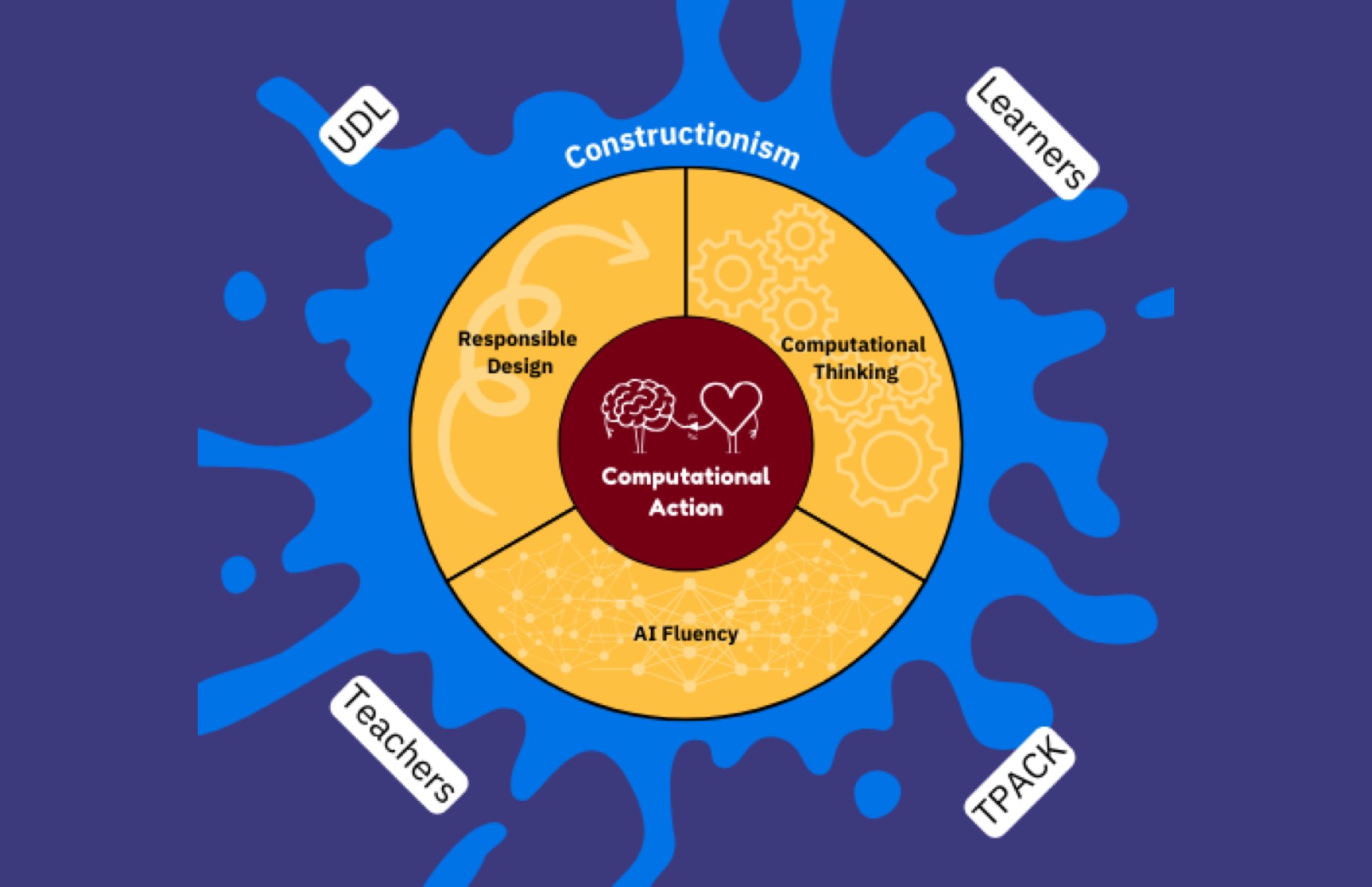
As part of designing the RAICA curriculum, design-based researchers work closely with both MIT curriculum designers and teacher co-designers, user-testers, and beta-testers to generate design principles that lead to an inclusive curriculum that empowers students and teachers to apply computational thinking and to be creative with AI.
Groups
Funders/Sponsors
Related Publications
- Generating Constructionist Criteria for AI Educational Technology: How to evaluate AI tools that help students build knowledge
Lydia Guterman, Sarah Wharton, and Mary Cate Gustafson-Quiett – 2025
In this hands-on and highly collaborative workshop, participants will draw upon their personal experience with constructionist tools to collaboratively develop a set of criteria to define effective constructionist tools.
- Advancing Research on Equitable AI Education Through a Focus on Implementation: Insights from a Middle School Computer Vision Module Beta-Test
Christina Bosch, Mary Gustafson-Quiett, Samar Abu Hegly, Sarah Wharton, John Masla, Lydia Guterman, Calvin Macatantan, Eric Klopfer, Hal Abelson, Cynthia Breazeal – 2025
Part of a university initiative supporting responsible AI for social empowerment and education, the project-based RAICA (Responsible AI for Computational Action) curriculum supports middle/high school learners and novice AI literacy teachers use AI creatively for good.
- Supporting AI Literacy Teaching Through the Development of Assessments for Classroom Use
John Masla, Christina Bosch, Prerna Ravi, Lydia Guterman, Sarah Wharton, Mary Cate Gustafson-Quiett, Samar Abu Hegly, Calvin Macatantan, Eric Klopfer, Cynthia Breazeal, and Hal Abelson – 2025
Initial discussion of AI literacy assessment has focused on competency frameworks and learning standards rather than materials for classroom use.
- Act Out an LLM
Sarah Wharton, John Masla, Lydia Guterman, Mary Cate Gustafson-Quiett, Christina Bosch, Samar Abu Hegley, Calvin Macatantan, Eric Klopfer, Cynthia Breazeal, and Hal Abelson – 2025